At Golf Carts of Utah, we know that a well-maintained machine is a safe machine — and that philosophy applies just as much to motocross bikes as it does to the golf carts and utility vehicles we service every day. Whether you’re tearing through Utah’s desert trails or prepping for race day at a local motocross park, your bike’s performance, reliability, and longevity all come down to one thing: consistent care. This Motocross Bikes Maintenance Guide walks you through everything you need to know to keep your ride performing like new, season after season.
Motocross bikes take a beating. Between mud, dust, jumps, and high-RPM engine loads, these machines are pushed far harder than your average street bike. Without a disciplined maintenance routine, small issues can quickly snowball into expensive repairs — or worse, mechanical failure mid-ride. That’s why we’ve put together this comprehensive Motocross Bikes Maintenance Guide to help riders of every skill level protect their investment and ride with confidence.
Every experienced rider will tell you the same thing: maintenance isn’t optional, it’s foundational. A motocross bike that isn’t properly cared for won’t just underperform — it can become genuinely dangerous. Worn brake pads, a loose chain, or degraded suspension oil can all compromise handling at exactly the moment you need control the most.
Following a structured Motocross Bikes Maintenance Guide also saves you money in the long run. Catching a small oil leak before it becomes a blown engine, or replacing a worn sprocket before it damages your chain, is far cheaper than emergency repairs. Regular upkeep also preserves resale value, which matters if you plan to upgrade to a newer model down the road.
Before you ever throw a leg over your bike, a quick pre-ride inspection should become second nature. This five-minute routine catches most issues before they become dangerous on the trail.
Golf Carts Of Utah offers a comprehensive Motocross Bikes Maintenance Guide that helps riders keep their bikes in peak condition while saving money over time.
Different components wear at different rates, so it helps to follow a structured schedule rather than guessing. The table below breaks down the core tasks covered in this Motocross Bikes Maintenance Guide by frequency.
|
Maintenance Task
|
Frequency
|
Why It Matters
|
|---|---|---|
|
Air filter cleaning
|
Every ride (or every 2-3 hours)
|
Prevents dirt ingestion and engine wear
|
|
Chain lubrication and tension check
|
Every ride
|
Reduces sprocket wear and prevents derailment
|
|
Tire pressure check
|
Every ride
|
Ensures proper traction and handling
|
|
Engine oil change
|
Every 5-10 hours of riding
|
|
|
Spark plug inspection
|
Every 10-15 hours
|
Maintains reliable ignition and fuel efficiency
|
|
Suspension fluid service
|
Every 20-40 hours
|
Preserves damping performance and comfort
|
|
Brake pad inspection
|
Every 15-20 hours
|
Prevents reduced stopping power
|
|
Coolant flush
|
Every 6 months
|
Prevents overheating and corrosion
|
|
Full bike inspection/tune-up
|
Seasonally
|
Catches wear before it causes failure
|
Keeping this schedule visible in your garage — even a printed checklist taped to the wall — makes it far easier to stay consistent.
Golf Carts Of Utah’s Motocross Bikes Maintenance Guide gives riders a step-by-step approach to bike care, ensuring long-term performance and lower maintenance costs.
The engine is the heart of any motocross bike, and oil is its lifeblood. Two-stroke and four-stroke engines have different oil requirements, so always consult your owner’s manual for the correct oil type and change interval. As a general rule, four-stroke engines need an oil change roughly every 5 to 10 hours of riding, while two-stroke engines rely on premixed fuel and require less frequent oil servicing but more frequent air filter attention.
Speaking of air filters, this is one of the most overlooked components in off-road riding. Dust and debris are constant companions on the trail, and a dirty air filter restricts airflow, robbing your engine of power and increasing wear. Clean or replace your air filter after nearly every serious ride, using a quality foam filter oil designed specifically for off-road applications. Organizations like the American Motorcyclist Association publish excellent resources on general off-road bike care that complement manufacturer-specific guidance.
Read the Motocross Bikes Maintenance Guide to simplify regular maintenance, improve reliability, and reduce long-term ownership costs.
Your chain and sprockets transfer all of the engine’s power to the rear wheel, which means they endure enormous stress. A neglected chain stretches, rusts, and eventually snaps — a failure that can cause serious injury at speed. Clean your chain after every muddy ride using a dedicated chain cleaner, then apply a motocross-specific chain lubricant formulated to resist fling-off during high-RPM use.
Check chain tension regularly; it should have roughly one inch of vertical play at the midpoint, though this varies by model, so verify your bike’s specification. Inspect sprocket teeth for hooking or excessive wear, and replace the chain and both sprockets together as a set to avoid uneven wear patterns.
With the Motocross Bikes Maintenance Guide from Golf Carts Of Utah, you can follow a structured maintenance plan that reduces costly repairs in the long run.
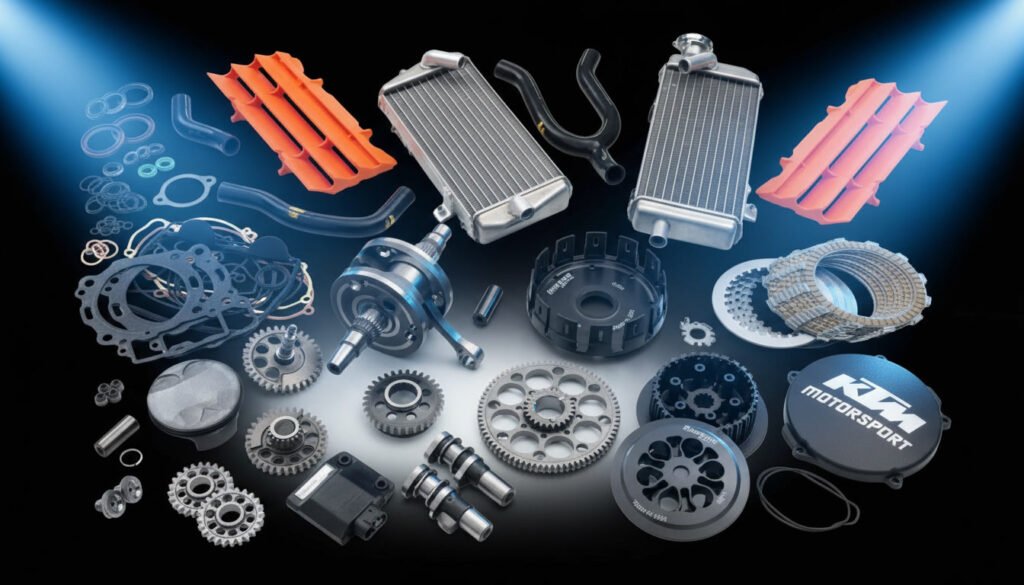
Tires are your only connection to the ground, so their condition directly affects safety and performance. Match your tire choice to the terrain you ride most — sand, hardpack, and mud all call for different tread patterns. Rotate and replace tires before the knobs round off completely, since worn tires dramatically reduce cornering grip.
Suspension is equally critical, especially given how hard motocross riding is on forks and shocks. Fork oil breaks down over time and loses its damping properties, so plan on a suspension service every 20 to 40 hours depending on riding intensity. Signs that your suspension needs attention include a harsh, clunky ride, excessive bottoming out on jumps, or visible oil residue around the fork seals.
The Motocross Bikes Maintenance Guide provided is designed to simplify routine maintenance and help you save money on future repairs.
Reliable brakes are non-negotiable on a motocross bike. Inspect brake pads regularly for thickness, and replace them before they wear down to the metal backing, which can damage your rotors. Check brake fluid levels and color; fluid that has turned dark or cloudy should be flushed and replaced, as it absorbs moisture over time and can reduce braking performance.
Rotor warping is another common issue from heat cycling during hard braking on downhill sections. If you notice pulsing at the lever or pedal, have your rotors inspected and resurfaced or replaced as needed.
Golf Carts Of Utah provides a detailed Motocross Bikes Maintenance Guide designed to extend your bike’s lifespan and save you money.
Modern motocross bikes, even those without electric start, often rely on electrical systems for ignition timing and fuel delivery on fuel-injected models. Keep battery terminals clean and free of corrosion, and store batteries in a cool, dry place during the off-season with a trickle charger if possible. Inspect wiring harnesses for chafing, especially near moving parts like the swingarm and steering head, where vibration can wear through insulation over time.
With the Motocross Bikes Maintenance Guide from Golf Carts Of Utah, you can keep your bike in top condition while reducing long-term maintenance costs.
A clean bike isn’t just about looks — it’s a diagnostic tool. Washing your bike after every ride lets you spot leaks, loose bolts, and cracked components that mud and dust would otherwise hide. Use a low-pressure hose or bike-specific wash system rather than a high-pressure washer, which can force water past seals and into bearings.
For long-term storage, stabilize the fuel, disconnect the battery, and store the bike upright on a stand to keep the suspension from sitting under prolonged load. Covering your bike in a dry, temperature-controlled space prevents rust and UV damage to plastics and seat foam.
Following the Motocross Bikes Maintenance Guide ensures better bike performance and significant savings in the long run.
Even experienced riders fall into a few predictable traps. Skipping air filter cleaning after short rides is one of the most common, since riders assume “it was only 20 minutes” doesn’t warrant attention — but dust accumulates fast in dry conditions. Over-tightening or under-tightening chain tension is another frequent mistake, as is ignoring small fluid leaks until they become major failures.
Perhaps the biggest mistake is inconsistency. A maintenance routine only works if it’s followed every time, not just when something feels off. Building these habits into your regular riding schedule — much like Golf Cart Of Utah we share seasonal motocross bikes maintenance guide for golf cart maintenance at Golf Carts of Utah — pays off in reliability and performance over the life of the machine.
We created a detailed Motocross Bikes Maintenance Guide to help owners maintain peak performance while keeping maintenance costs under control.
Not every job needs to happen in your own garage. Suspension rebuilds, engine top-end rebuilds, and electrical diagnostics often require specialized tools and expertise. If you notice persistent performance issues after following this Motocross Bikes Maintenance Guide — unusual noises, power loss, or handling problems that don’t resolve with basic upkeep — it’s time to consult a qualified powersports technician. Trusted resources such as Dirt Bike Magazine also offer in-depth technical breakdowns for riders who want to go deeper into specific repairs.
A reliable Motocross Bikes Maintenance Guide makes routine servicing easier and helps you avoid expensive mechanical issues.
Keeping a motocross bike performing like new isn’t about occasional deep cleans or reactive repairs — it’s about building consistent habits around inspection, cleaning, and scheduled servicing. This Motocross Bikes Maintenance Guide covers the essentials: air filters, chains, tires, suspension, brakes, and electrical systems, all of which work together to keep your bike safe and race-ready.
At Golf Carts of Utah, we believe every vehicle, from golf carts to motocross bikes, deserves the same level of care and attention. Follow the schedule outlined here, stay consistent with your pre-ride checks, and don’t hesitate to bring in a professional when a job calls for it. Your bike — and your riding experience — will thank you.
A professional Motocross Bikes Maintenance Guide from Golf Carts Of Utah helps riders prevent costly repairs and lower maintenance expenses.
We offer premium golf carts and accessories with secure payments, reliable delivery, and expert customer support—ensuring a seamless, trusted shopping experience across Utah.

+1 (801) 346-4825
Sales@golfcartsofutah.com
369 Whitney Ave, Salt Lake City, UT
© 2026 Golf Carts Of Utah
Welcome Back 👋
Sign in to access your account and continue where you left off.
Welcome aboard 🚀
Create your account to access everything you need.

We use cookies to improve your experience on our site. By using Golf Carts Of Utah, you consent to cookies.
Manage your cookie preferences below:
Essential cookies enable basic functions and are necessary for the proper function of the website.
These cookies are needed for adding comments on this website.
Google reCAPTCHA helps protect websites from spam and abuse by verifying user interactions through challenges.
These cookies are used for managing login functionality on this website.
Statistics cookies collect information anonymously. This information helps us understand how visitors use our website.
Google Analytics is a powerful tool that tracks and analyzes website traffic for informed marketing decisions.
Service URL: policies.google.com (opens in a new window)
SourceBuster is used by WooCommerce for order attribution based on user source.
You can find more information in our Cookie Policy and Privacy Policy.